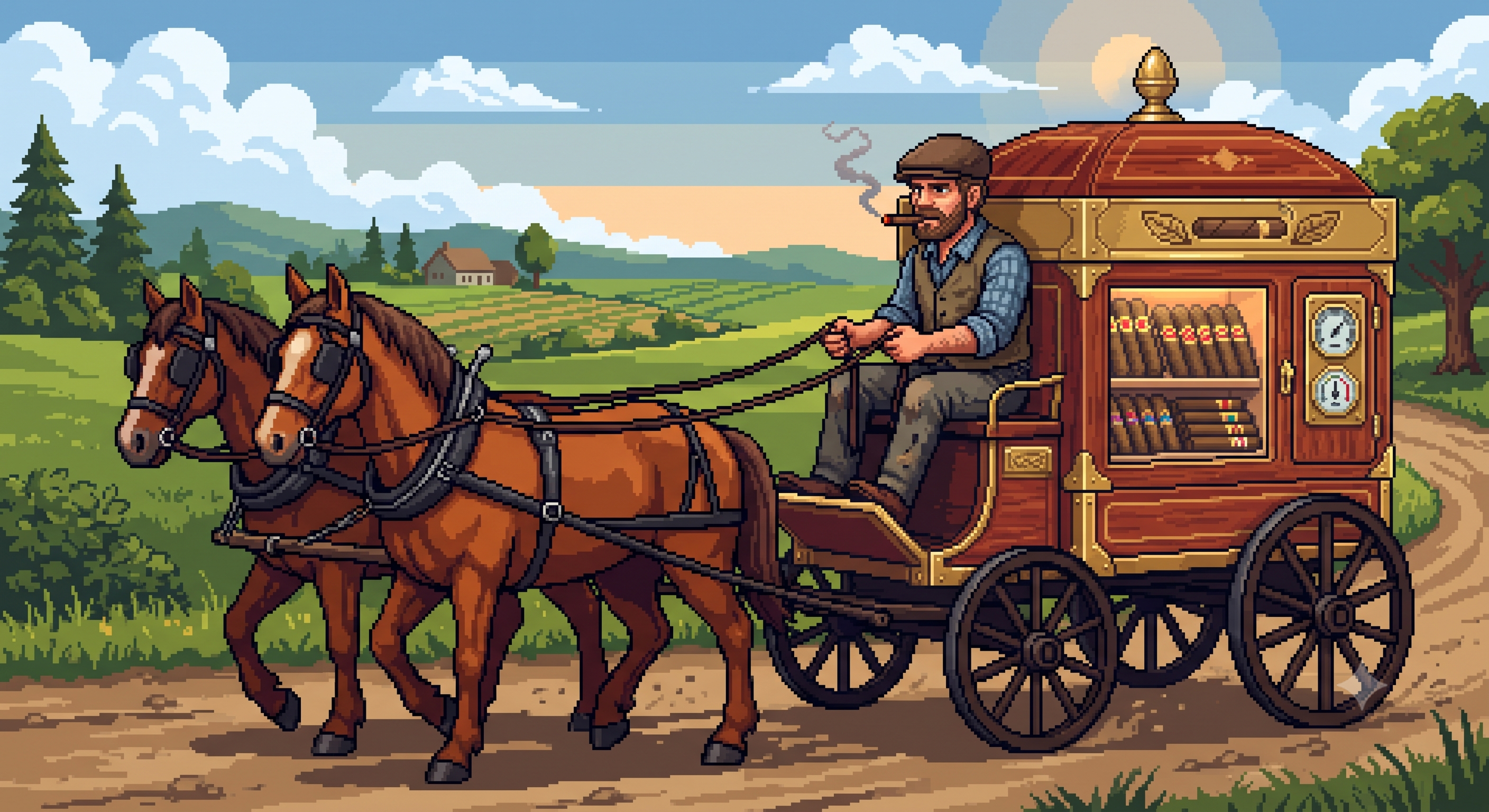
When our great-great-grandfather, Elias Wylie, founded Wylie Milk Cigars in Wylie, Texas, in the late 1890s, everyone told him he was mad.
Wylie was a boomtown then, bustling with new railroads and cotton. Everyone rolled local Texas tobacco. It was cheap, it was harsh, and it didn't last. Elias didn't want to make a "stogie"; he wanted to create the "Havana of the Plains."
He knew that while the body and filler of a cigar could be sourced from rugged Southern fields, the wrapper leaf — the silky, elastic outer layer that defines a premium smoke — could only come from one place: the Connecticut River Valley.
He refused to trust new-fangled railroads with his precious cargo. He believed the vibration and clatter of the trains would damage the subtle, oily sheen of the Connecticut Broadleaf he required.
So, every three years, he began his ritual. He would pack a custom-reinforced buckboard buggy, hitch up his prize Morgan horses, Major and Scout, and wave goodbye to his family in Wylie.
He was gone for six months.
The trip was grueling. He faced the mud of Arkansas, the mountains of Appalachia, and the industrial grime of the North. But when he arrived in Windsor, Connecticut, the farmers knew the crazy Texan. Elias would spend weeks examining leaves, selecting only the top ligero broadleaf — the most muscular, dark, and flavorful wrapper in the world.
To get them back to Wylie across 1,700 miles without them turning to dust, Elias invented a unique solution: the Humidor Wagon. He lined the buggy with Spanish cedar imported through Galveston and hung wet wool blankets to manage the humidity every single night, all the way home.
When he returned to Wylie, he was a ragged man, but his cargo smelled like a New England autumn. We continue making our cigars with that same spirit of madness today. Because some things are worth the journey.